 Ngorongoro Crater Tour
Home › Guides › Ngorongoro Crater vs Serengeti: Which Safari Should You Choose?
Ngorongoro Crater vs Serengeti: Which Safari Should You Choose?
Ngorongoro Crater vs Serengeti comes down to time: the crater suits a traveller with one day, with over 25,000 animals on a floor of about 260 km², while the Serengeti suits a traveller with three days or more who wants the wildebeest migration country across about 15,000 sq km. This guide compares getting there, cost, the crater fees inside each tour price, crowds, the best months and how to combine both on one safari.
Quick answer One day in the crater or several days on the plains
Pick the Ngorongoro Crater if you have one day: tours from Arusha run 6-8 hours to 11 hours and the floor holds over 25,000 animals. Pick the Serengeti if you have three days or more and want the open plains of the migration. Most first safaris combine both, because the road to the Serengeti passes the crater rim.
Key takeaways
- One day only? The Ngorongoro Crater Day Trip from Arusha runs 10 hours for $325 per person with the crater fees inside the price.
- The cheapest crater day is the Budget Ngorongoro Crater Day Trip from Moshi or Arusha at $115, plus $169 per person in cash the day before for the entrance fee, crater service fee and 18% VAT.
- Both parks in one trip start with the 3-Day Serengeti and Ngorongoro Group Camping Safari at $770 per person, a listing that does not state whether the crater fees are included.
- Every crater day trip and multi-day safari is compared on the ngorongoro crater tour homepage, with the fee status of each tour.
Which is better, Serengeti or Ngorongoro?
Neither is better for everyone: the crater wins on density and a one-day trip, the Serengeti wins on space and multi-day migration safaris.
The two sit side by side on the northern circuit but give very different safari days.
Ngorongoro Crater and Serengeti side by side
Crater figures come from the Ngorongoro Conservation Area Authority (NCAA), which sets its fees.
| Factor | Ngorongoro Crater | Serengeti |
|---|---|---|
| Getting there | 173.8 km from Arusha Airport by road, a day trip from Arusha | Reached by road along the crater rim, a few hours to the northwest, or by fly-in safari |
| Time needed | One day, with tours of 6-8 hours to 11 hours | Multi-day: the tours here run 2 days to 5 days |
| Cost on this site | From $115 plus $169 in fees (Budget Ngorongoro Crater Day Trip from Moshi or Arusha), or $300 to $380 with fees included | From $770 per person (3-Day Serengeti and Ngorongoro Group Camping Safari), combined with the crater |
| What you see | Over 25,000 animals including the Big Five, black rhino, flamingos on Lake Magadi | About 4 million animals in the wider ecosystem, including the wildebeest herds |
| Size | About 260 km² of crater floor | About 15,000 sq km |
| Crowds | A maximum of 5 vehicles at one sighting, but many vehicles share one floor | About 15,000 sq km for vehicles to spread over |
| Who it suits | Short trips, first safaris, rhino seekers | Travellers with three days or more, migration seekers |
The short verdict
Density is the crater's strength, with almost 30,000 animals in about 100 square miles by one competitor's count. Space is the Serengeti's strength. If you can only fit one, your trip length decides it.
Sources: Ngorongoro Conservation Area Authority, Ngorongoro Conservation Area Authority, Ngorongoro Conservation Area Authority.
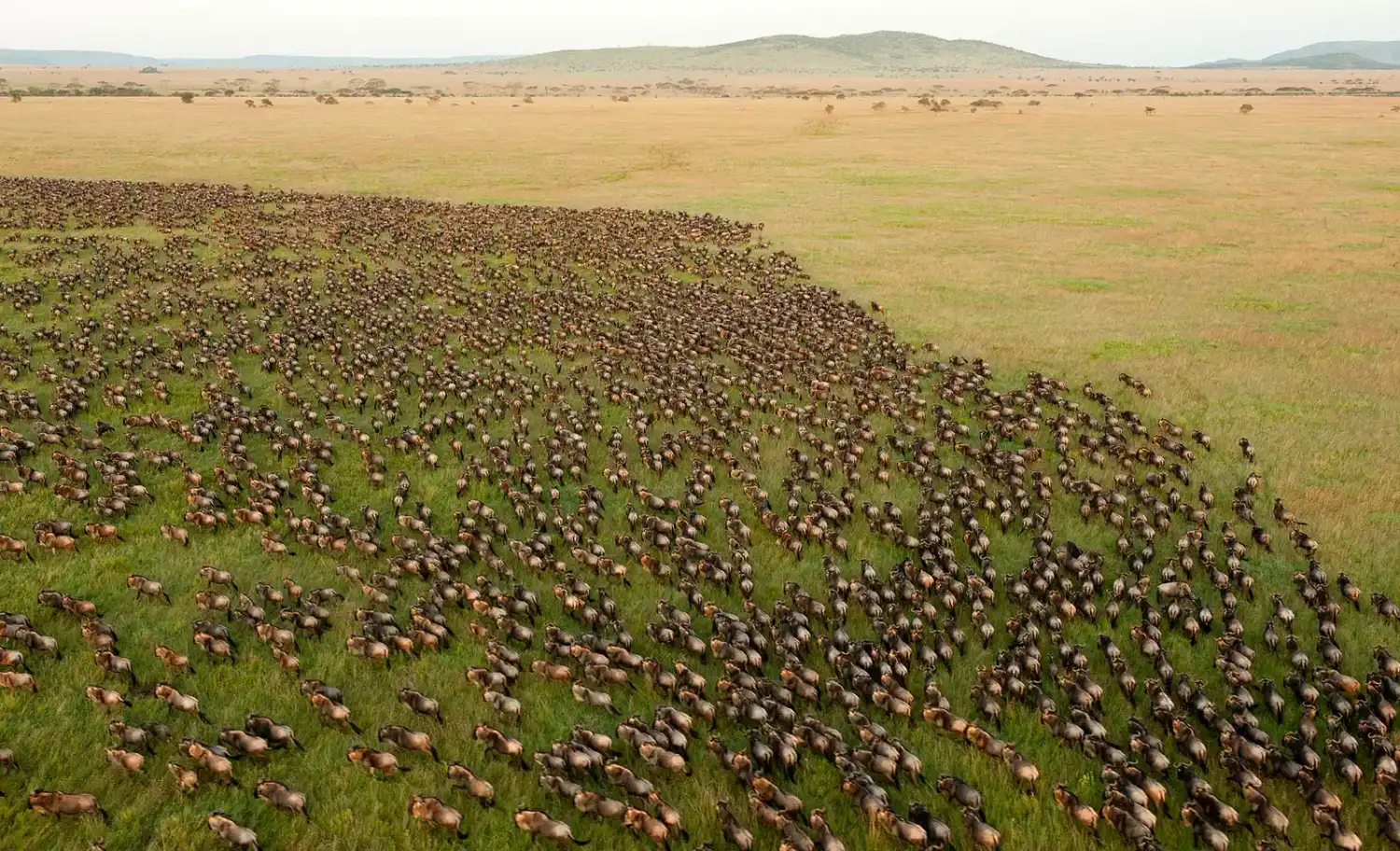
The migration herds are the Serengeti's big draw and they move across the plains through the year. Photo: Daniel Rosengren, CC BY 4.0, via Wikimedia Commons
What does the Ngorongoro Crater offer on a safari day?
The crater offers a dense, compact game drive inside a 610 m deep caldera where most of the area's species live on one floor.
The crater formed about 2.5 million years ago when a large volcano collapsed. UNESCO calls it the largest unbroken caldera in the world.
Wildlife in a bowl
The NCAA says the crater is home to over 25,000 animals, including the Big Five. With the exception of giraffes, most species of the conservation area can be found on the floor. The black rhino is the species the IUCN lists as endangered, and one competitor guide calls the crater the best place to observe it. Lake Magadi, a salt lake on the floor, is often home to thousands of lesser flamingos.
Animals move freely, so no tour can promise a sighting, but the area is small enough to cover in one drive.
How the day works
Gates to the crater open from 06:00 to 16:00. The descent takes approximately 20 minutes on a bumpy road of paving stones. You stay in the vehicle except in designated areas, a licensed guide must accompany you, and walking safaris are not allowed on the floor.
There is no restaurant inside, so tours bring lunch boxes to the free public picnic areas.
Sources: Ngorongoro Conservation Area Authority, Ngorongoro Conservation Area Authority, NCAA tourism activities, Ngorongoro Conservation Area Authority, Ngorongoro Conservation Area Authority, UNESCO World Heritage Centre.
Map of the Crater and the Serengeti
The crater and the central Serengeti sit on one road west from Arusha, which is why the 3-day safaris pair them.
- 1 Ngorongoro CraterA 260 km² caldera floor, 610 m below the rim.
- 2 Seronera, central SerengetiCamping and lodge nights on the Serengeti trips.
- 3 Olduvai GorgeOn the road between the crater and the Serengeti.
- 4 KaratuThe town below the crater rim.
- 5 ArushaStart town of almost every tour.
Numbers match the pins on the map.
Coordinates: Wikipedia and Wikidata.
What does the Serengeti offer that the crater cannot?
The Serengeti offers scale: about 15,000 sq km of plains and an ecosystem of about 4 million animals that needs several days to explore.
The Serengeti is a park you drive through over days, not a single bowl you circle in one game drive.
The herds and the open plains
One competitor guide counts about 4 million animals in the Serengeti ecosystem, including a million and a half wildebeest and a quarter million zebra. UNESCO puts the migration at well over 1 million wildebeest, 72,000 zebras and about 350,000 gazelles.
A safari that wants both the herds and a high-density day books the two together.
Why it needs more time
A one-day Serengeti tour is not on this site. The shortest trip with the Serengeti is the 2-Day Fly-In Safari from Zanzibar to Serengeti and Ngorongoro at $2,265, which flies in. By road, the shortest is a 3-day safari such as the 3-Day Serengeti and Ngorongoro Crater Group Camping Safari at $815, with the crater fees included.
Source: UNESCO World Heritage Centre.
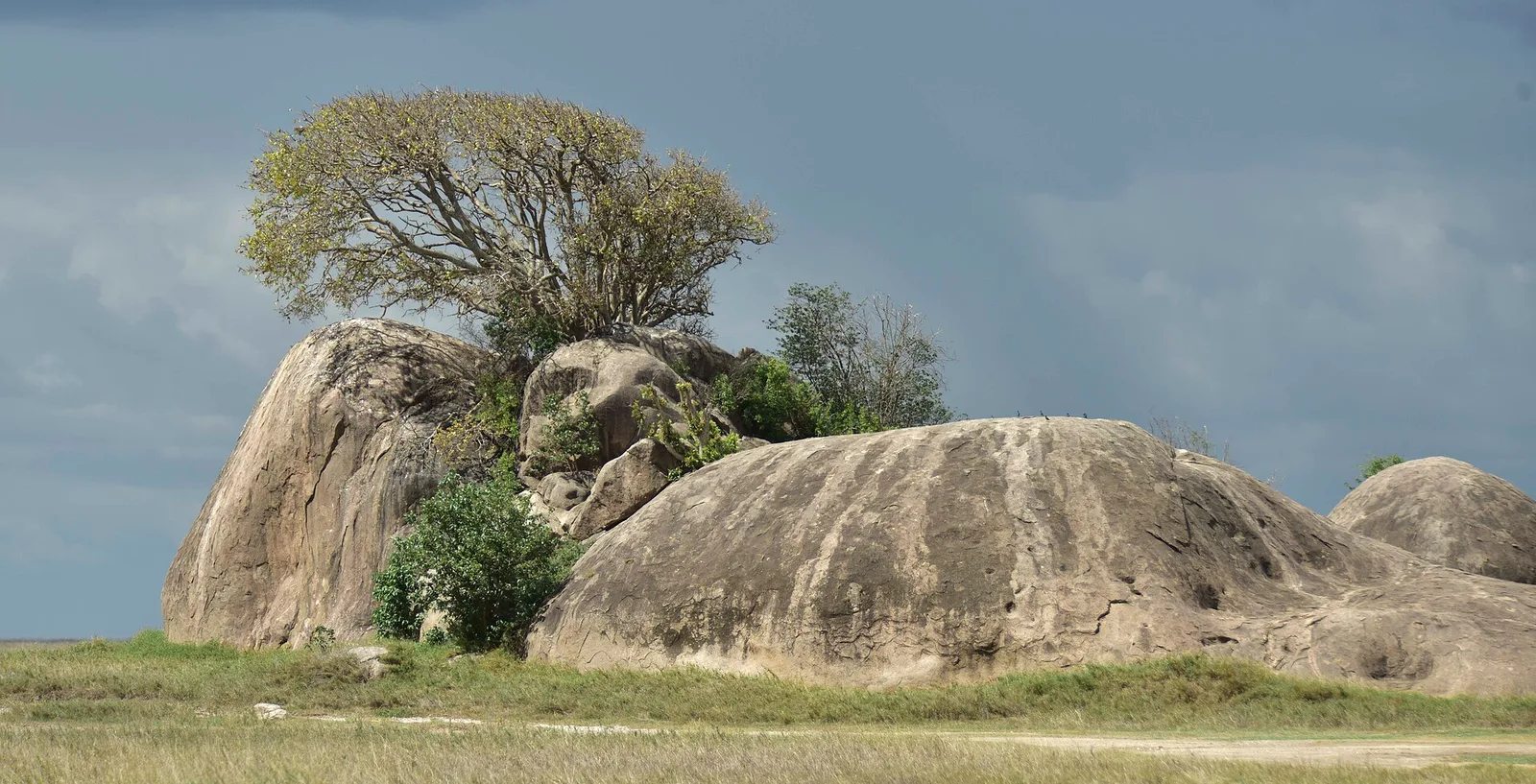
Kopjes are granite outcrops scattered across the Serengeti plains and a favourite lookout for lions. Photo: Benoni95, CC BY-SA 4.0, via Wikimedia Commons
Why are there no giraffes in Ngorongoro?
Giraffes do not live on the crater floor because the walls are too steep for them to walk down.
The NCAA lists the giraffe as the one exception among the species found on the crater floor.
The steep walls
The crater walls rise nearly 2,000 feet (600 m) above the floor. One safari operator explains that giraffe cannot descend that grade without lowering their heads, which raises their blood pressure to dangerous levels.
If giraffes are high on your list, a multi-day safari that adds Tarangire or the Serengeti covers them. Tarangire is full of trees and much hillier, a very different landscape from the crater.
Tours That Fit
A crater day, both parks in three days, or a longer northern circuit.
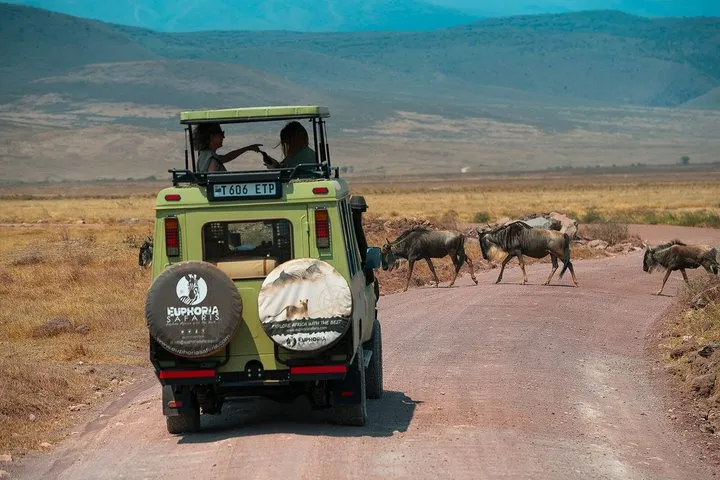 from $325
Most booked day trip
Ngorongoro Crater Day Trip from Arusha
The most-booked crater day trip: a small group of up to 6 from Arusha, with every fee and tax in the price.
Check Availability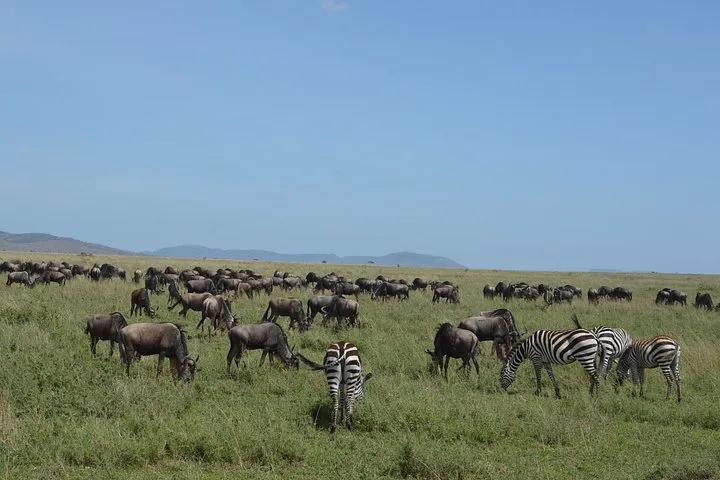 from $770
Most reviewed
3-Day Serengeti and Ngorongoro Group Camping Safari
The most-reviewed safari here: 3 days of group camping in the Serengeti and on the crater rim, up to 7 people.
Check Availability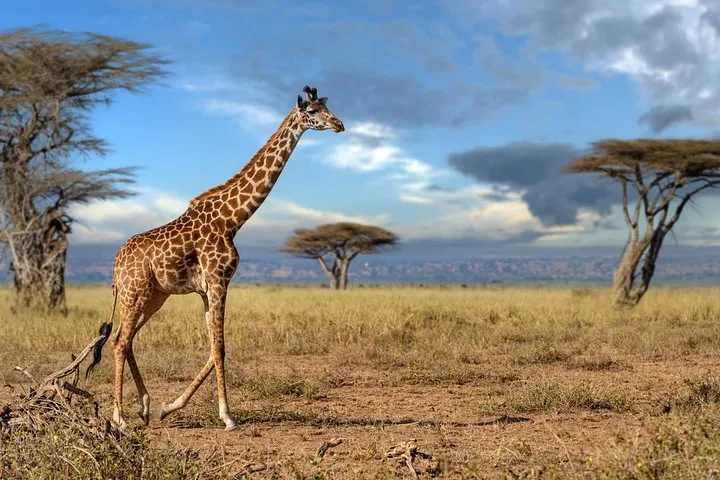 from $1,750
Mid-range lodges
4-Day Tarangire, Serengeti and Ngorongoro Mid-Range Safari
Four days with three nights in mid-range lodges and camps, for a small group of up to 7.
Check Availability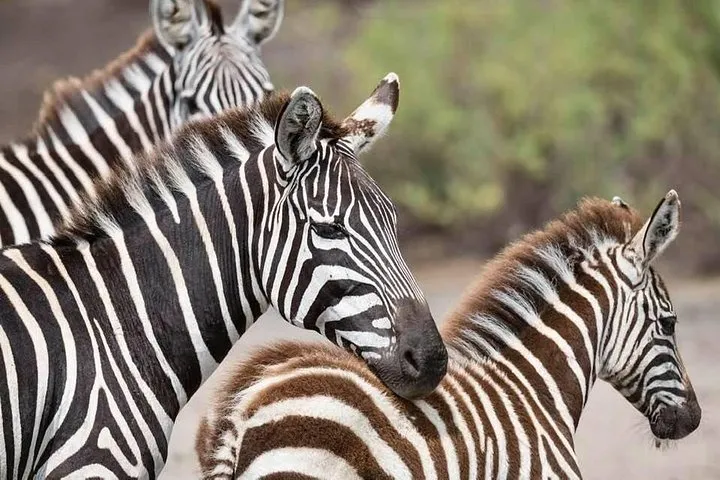 from $2,845
5-Day Serengeti and Ngorongoro Private Safari
A private 5-day lodge safari from Kilimanjaro Airport. No refund once booked.
Check AvailabilityHow much more does the crater cost, and are the fees in the tour price?
The crater carries its own fees, a USD 70.80 entry per adult and a USD 295 service fee per vehicle, so check each listing for whether they are inside the price.
The NCAA charges non-East African adults aged 16 and over a USD 70.80 ($70.80) entry permit and a crater service fee of USD 295 ($295) per vehicle per trip. A permit is valid for one entry within 24 hours.
Fee status of each tour
Read the fee column before the price column. A listing marked as not stating its fees may still include them, so ask the operator before you book.
| Tour | Price | Length | Crater fees |
|---|---|---|---|
| Ngorongoro Crater Day Trip from Arusha | $325 | 10 hours | Included |
| Private Ngorongoro Crater Day Safari from Arusha | $350 | 11 hours | Included |
| Shared Group Ngorongoro Crater Day Trip | $300 | 6-8 hours | Included |
| Ngorongoro Crater Joining Group Day Trip | $380 | 9 hours | Included |
| Budget Ngorongoro Crater Day Trip from Moshi or Arusha | $115 | 1 day | Paid on top, $169 in cash |
| 3-Day Serengeti and Ngorongoro Group Camping Safari | $770 | 3 days | Not stated on the listing |
| 4-Day Tarangire, Serengeti and Ngorongoro Mid-Range Safari | $1,750 | 4 days | Not stated on the listing |
| 5-Day Serengeti and Ngorongoro Private Safari | $2,845 | 5 days | Not stated on the listing |
The budget day in practice
The Budget Ngorongoro Crater Day Trip from Moshi or Arusha lists $115 per person and adds $169 per person for the entrance fee, crater service fee and 18% VAT, paid in cash the day before.
For a combined safari, the 3-Day Serengeti and Ngorongoro Big Five Safari at $900 and the 5-Day Tarangire, Serengeti and Ngorongoro Safari at $2,211.29 include the crater fees in the price.
Sources: Ngorongoro Conservation Area Authority, Ngorongoro Conservation Area Authority.
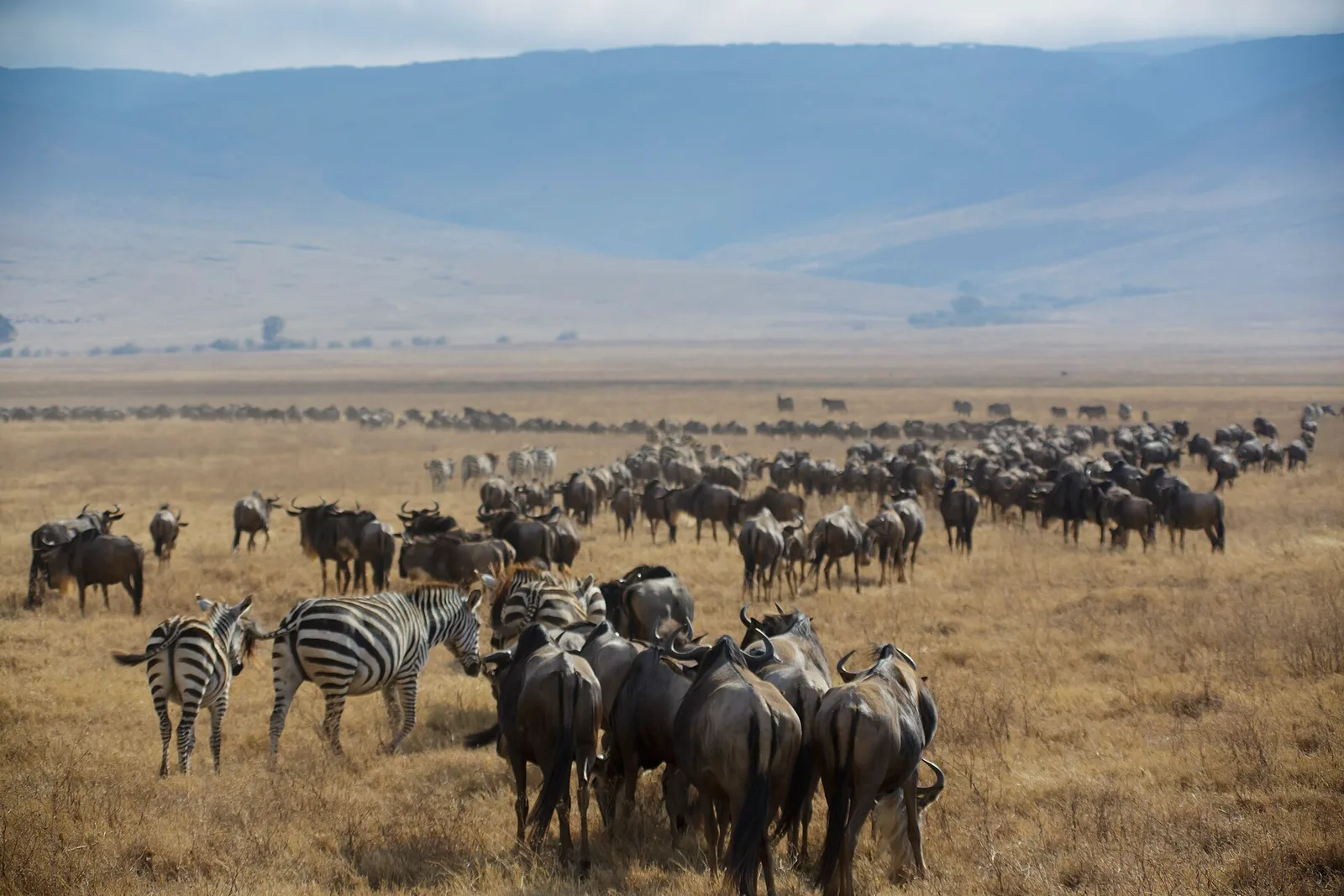
Resident wildebeest and zebra graze the crater floor, in a space small enough to see across. Photo: Thomas Fuhrmann, CC BY-SA 4.0, via Wikimedia Commons
When is the best time for the crater and for the Serengeti?
The crater works all year, with drier spells from June to October and January to mid-March, while the Serengeti timing follows the migration.
The NCAA says the conservation area is open all year, rainy season included, and advises a 4x4 in muddy periods.
Season by season
The comparison below uses the NCAA seasons and the migration timing given by competitor guides.
| Period | Ngorongoro Crater | Serengeti and Ndutu |
|---|---|---|
| June to October | Dry season, coldest months June to August on the rim | Dry season |
| November to May | Wet season, greener floor | Ndutu calving season from late December to April |
| January to mid-March | A drier spell inside the wet season | Calving grounds in the Ndutu area |
| March to April | Wet season | Migration around March to April, following the rains |
What the season changes
Game viewing in the crater is good year-round because the animals stay on the floor. Temperatures are always lower on the rim than on the floor and nights are cold, so pack a warm layer in any month. Ndutu, the calving area, lies inside the Ngorongoro Conservation Area and has its own airstrip, so a calving-season safari can pair it with the crater.
Sources: Ngorongoro Conservation Area Authority, Ngorongoro Conservation Area Authority, Ngorongoro Conservation Area Authority.
Can you combine the Serengeti and Ngorongoro on one safari?
Yes, the two combine easily, because the road from Arusha to the Serengeti passes along the crater rim.
Most northern circuit safaris link the two. Passing along the rim is the road route to the Serengeti, a few hours to the northwest.
How the combined trip runs
Tarangire, about two and a half hours by road from Arusha, is the usual add-on, and the 4-day and 5-day trips here include it or more Serengeti time. The main entry gate, Loduare, is 14 km from Karatu town. Longer luxury itineraries run as long as 12 days with charter flights between camps.
On this site, the 3-Day Serengeti and Ngorongoro Group Camping Safari at $770 is the shortest road trip with both parks, rated 5 from 796 reviews. The 4-Day Tarangire, Serengeti and Ngorongoro Mid-Range Safari at $1,750 adds Tarangire, and the 5-Day Serengeti and Ngorongoro Private Safari at $2,845 is private, with no refund on cancellation.
Which should you choose for your trip length and travel style?
Choose the crater for one day or a tight budget, the Serengeti for the migration and space, and both when you have three days or more.
Match the place to your days and your priorities.
By traveller type
Short on time: a crater day trip from Arusha, such as the Shared Group Ngorongoro Crater Day Trip at $300 with fees included.
First safari with three days: the 3-Day Serengeti and Ngorongoro Group Camping Safari at $770 gives the plains and the crater in one booking.
Rhino and Big Five focus: spend your main game drive in the crater, where the black rhino lives on an open floor.
Migration and big skies: book four days or more so the Serengeti gets full days, such as the 4-Day Tarangire, Serengeti and Ngorongoro Mid-Range Safari.
Private vehicle: the Private Ngorongoro Crater Day Safari from Arusha at $350 for a day, or the 5-Day Serengeti and Ngorongoro Private Safari for five days.
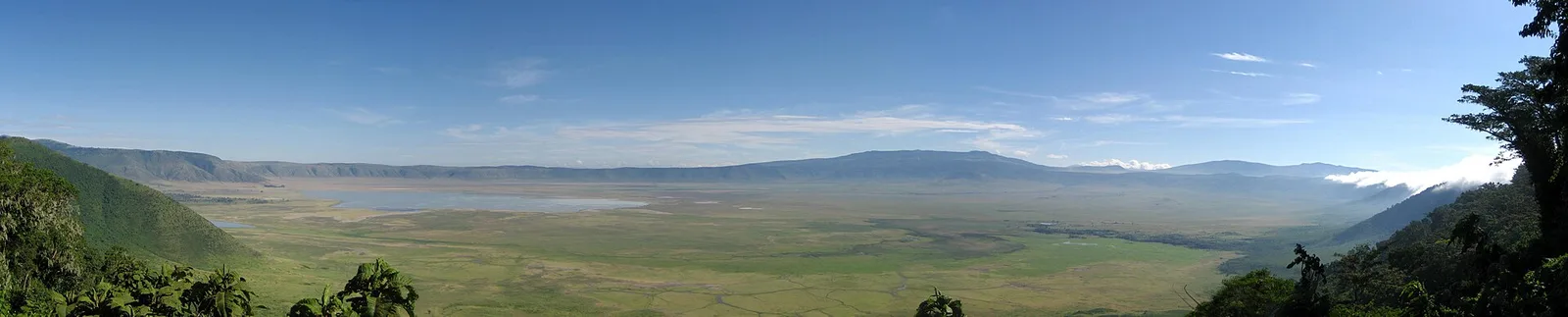
The crater is one walled bowl you can take in from a single overlook, unlike the open Serengeti. Photo: Thomas Huston, CC BY-SA 3.0, via Wikimedia Commons
What I wish I knew before visiting Tanzania for safari?
Sort out the visa, the crater fees and warm clothes before you land, because each one catches first-time visitors out.
These are the practical points that change a crater or Serengeti day.
Before you fly
An ordinary single-entry Tanzania visa costs USD 50 ($50), but US passport holders on tourism must apply for the USD 100 ($100) multiple-entry visa. Passports need six months of validity. The CDC says yellow fever vaccine is not required for direct travel from the United States, but it is required from countries with transmission risk, including layovers over 12 hours.
Malaria risk covers all areas below 1,800 m.
On the day
Gates open at 06:00, so crater days start before dawn. The rim is colder than the floor, and temperatures in the conservation area range from 3°C to 35°C. Plastic bags are not allowed in the area.
Sources: Tanzania Immigration Department, CDC Travelers' Health, Ngorongoro Conservation Area Authority, Ngorongoro Conservation Area Authority.
Ngorongoro Crater vs Serengeti FAQ
Is it worth going to Ngorongoro Crater?
Yes for most travellers: it packs over 25,000 animals into one day, and a ngorongoro crater tour from Arusha fits a short trip.
Is Ngorongoro better than Serengeti?
It is better for a single day and for rhino, the Serengeti is better for the herds and space, and the 3-Day Serengeti and Ngorongoro Group Camping Safari combines both.
Is the Ngorongoro Conservation Area the same as the crater?
No, the conservation area covers about 8,094 km² and includes the crater, Olduvai Gorge and Ndutu, while game drives on a ngorongoro crater tour happen on the crater floor.
How do you get from the Ngorongoro Crater to the Serengeti?
By road along the crater rim, a few hours to the northwest, which is how the 4-Day Tarangire, Serengeti and Ngorongoro Mid-Range Safari runs.
Can you see the Serengeti on a day trip?
Not on this site: the shortest Serengeti option is the 2-Day Fly-In Safari from Zanzibar to Serengeti and Ngorongoro, while a crater day like the Ngorongoro Crater Day Trip from Arusha fits one day.
More Guides
- Olduvai Gorge: How to Visit It on a Ngorongoro Crater Safari
Olduvai Gorge in 2027: over 60 hominin fossils, a museum and a stop between the crater and the Serengeti. Plan your visit here.
- Tanzania Camping Safari: 3 Days in the Serengeti and Ngorongoro Crater
3-day camping safaris with 2 nights at Seronera and the crater rim, compared on fees and group size in 2027. Find yours.
- 2-Day Tanzania Safari to Tarangire and the Ngorongoro Crater
2-day safaris from Arusha with 1 night out, compared on crater fees and where you sleep in 2027. Pick the one that fits.