 Ngorongoro Crater Tour
Home › Guides › Olduvai Gorge: How to Visit It on a Ngorongoro Crater Safari
Olduvai Gorge: How to Visit It on a Ngorongoro Crater Safari
Olduvai Gorge is the ravine inside the Ngorongoro Conservation Area where Mary and Louis Leakey found early human fossils, and it sits on the road between Ngorongoro Crater and the Serengeti, so a stop costs a short detour and a USD 35.40 NCAA fee per adult. This guide covers why it is famous, what the Leakeys found, what the museum shows, where it is on the map and which crater safaris pass it.
Quick answer What it is, the fee and which safaris pass it
Olduvai Gorge has yielded fossil remains of over 60 hominins and has a small modern museum. The NCAA charges USD 35.40 per non-East African adult to visit, and it lies on the crater-to-Serengeti road, so it fits a multi-day safari far better than a crater day trip.
Key takeaways
- Routes that drive between the crater and the Serengeti pass the gorge, like the 3-Day Serengeti and Ngorongoro Group Camping Safari.
- A one-day Ngorongoro Crater Day Trip from Arusha goes to the crater floor and back, with no Olduvai stop on the listing.
- The 5-Day Serengeti and Ngorongoro Private Safari is private, so asking the driver-guide for a museum stop is simplest.
- Compare every day trip and multi-day route on the ngorongoro crater tour homepage before you ask for the stop.
Why Is Olduvai Gorge Famous?
Olduvai Gorge is famous because it has yielded fossil remains of over 60 hominins and a record of early stone tools that changed how people understand human evolution.
Britannica dates its deposits from about 2.1 million to 15,000 years ago, and those layers hold both bones and the tools their makers left behind.
A layered record of early humans
The gorge is the result of up to 90 m (300 ft) of erosion cutting into the sediments of a Pleistocene lake bed. That erosion exposed the old lake shore layer by layer, which is why fossils and tools turn up in sequence instead of in a jumble.
Wikipedia lists three groups of hominins in the gorge over time. Homo habilis occupied it approximately 1.9 million years ago, then Paranthropus boisei about 1.8 million years ago, then Homo erectus about 1.2 million years ago.
Why that matters on a safari day
For a traveller, the fame is the reason to stop. The landscape is quiet next to the crater, but the gorge explains the people side of the Ngorongoro Conservation Area, the same area that UNESCO added a cultural criterion to in 2010.
Source: UNESCO World Heritage Centre.
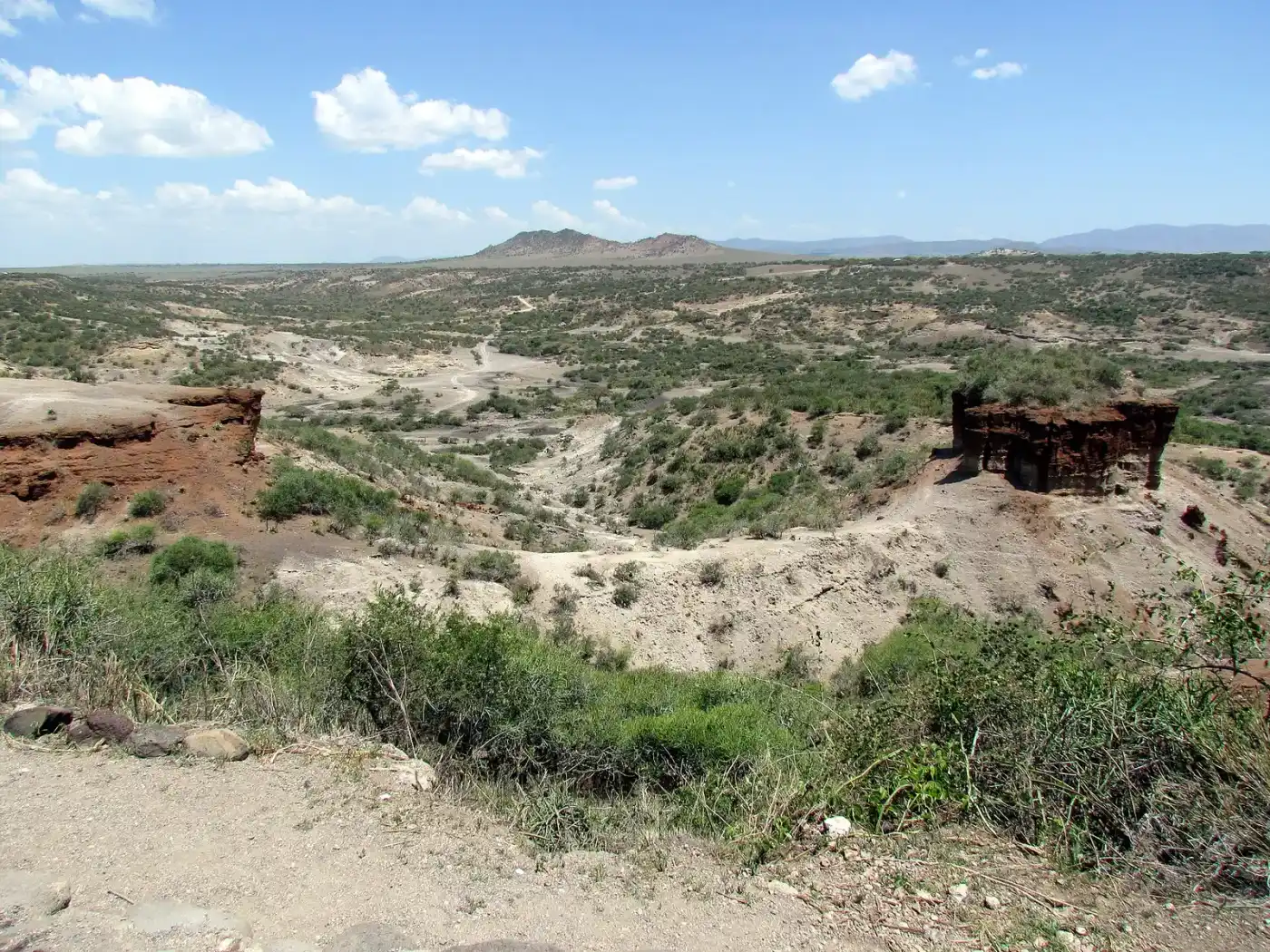
Olduvai Gorge, where excavations have found some of the oldest known remains of early humans. Photo: David Berkowitz, CC BY 2.0, via Wikimedia Commons
What Did Leakey Find in Olduvai Gorge?
Mary and Louis Leakey unearthed the Zinjanthropus (Australopithecus boisei) skull and remains of Homo habilis and Homo erectus over more than 30 years of work in the gorge.
The Leakey name is the one most visitors know. Their work turned a dry ravine into one of the best known fossil sites in Africa.
The key finds
Tanzania Tourism credits Mary and Louis Leakey with three headline discoveries:
| Find | Species | Approximate age in the gorge |
|---|---|---|
| Zinjanthropus skull | Australopithecus boisei (Paranthropus boisei) | 1.8 million years ago |
| Homo habilis remains | Homo habilis | 1.9 million years ago |
| Homo erectus remains | Homo erectus | 1.2 million years ago |
Tools as well as bones
The finds are not only skulls. Wikipedia gives stone tools and their makers, and the hunting and scavenging debate, their own sections. In the museum, the tool cases are as useful as the casts of skulls, because they show what the people did here, not only what they looked like.
Mary Leakey also founded the first museum at the gorge in 1970, so the story you hear on site is partly hers.
Where Is Olduvai Gorge?
Olduvai Gorge lies west of the crater, on the road the Serengeti safaris take between the crater rim and the plains.
- 1 Olduvai GorgeOn the road between the crater and the Serengeti.
- 2 Ngorongoro CraterA 260 km² caldera floor, 610 m below the rim.
- 3 Seronera, central SerengetiCamping and lodge nights on the Serengeti trips.
- 4 KaratuThe town below the crater rim.
Numbers match the pins on the map.
Coordinates: Wikipedia and Wikidata.
How Old Was the Skull Found in Olduvai Gorge?
The Zinjanthropus skull belongs to Paranthropus boisei, which occupied Olduvai Gorge about 1.8 million years ago.
Britannica records that in 1959 Mary Leakey discovered a skull fragment of an early hominin at the gorge. That find is the Zinjanthropus skull named in the Tanzania Tourism account.
Putting the age in context
Wikipedia places Paranthropus boisei in the gorge about 1.8 million years ago, a little after Homo habilis at approximately 1.9 million years ago. So the famous skull is not the oldest hominin from Olduvai, but it is the one that made the site world news.
The Ngorongoro Crater itself formed about 2.5 million years ago, when a large volcano collapsed. A crater safari with an Olduvai stop therefore covers two very old stories in one trip: the caldera and the early people who lived on the plains beside it.
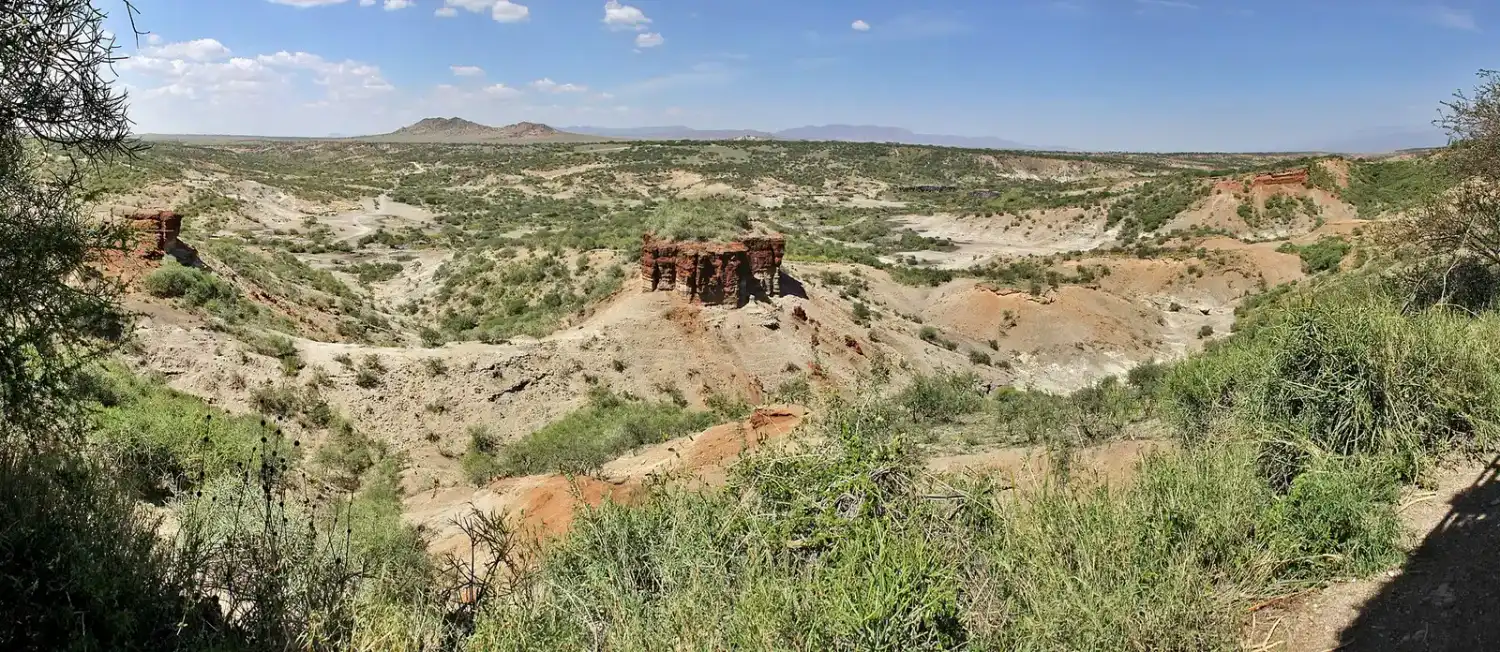
The scrubby landscape around the gorge on the road between the crater and the Serengeti. Photo: Mike Krüger, CC BY-SA 4.0, via Wikimedia Commons
Tours That Fit
Routes that drive between the crater and the Serengeti, where an Olduvai stop is easiest to add.
 from $770
Most reviewed
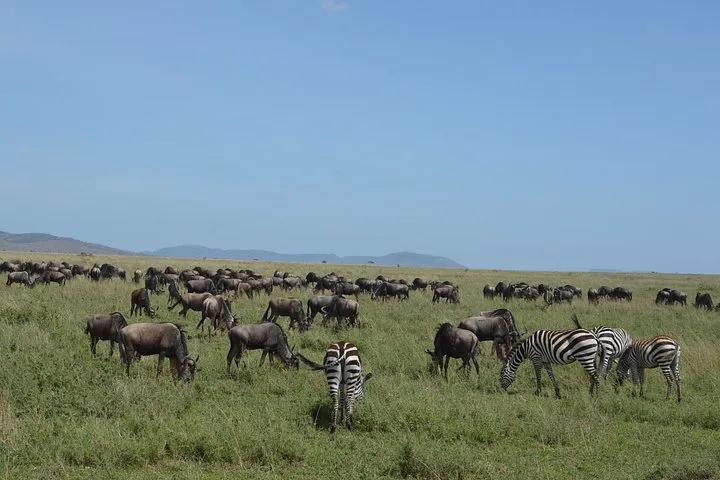
3-Day Serengeti and Ngorongoro Group Camping Safari
The most-reviewed safari here: 3 days of group camping in the Serengeti and on the crater rim, up to 7 people.
Check Availability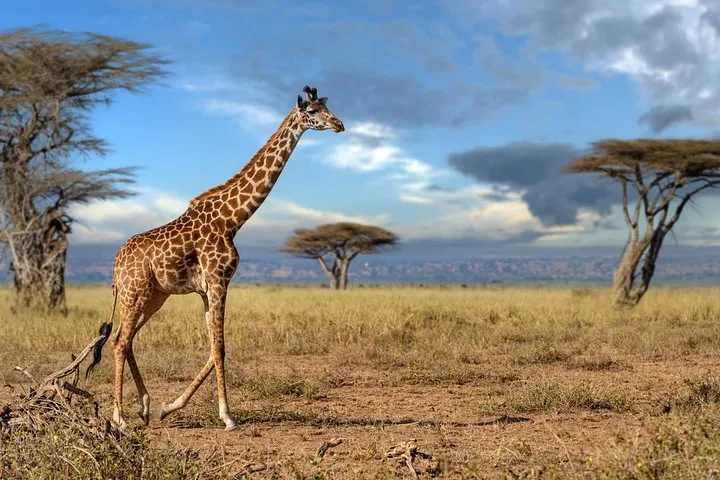 from $1,750
Mid-range lodges
4-Day Tarangire, Serengeti and Ngorongoro Mid-Range Safari
Four days with three nights in mid-range lodges and camps, for a small group of up to 7.
Check Availability from $2,845
5-Day Serengeti and Ngorongoro Private Safari
A private 5-day lodge safari from Kilimanjaro Airport. No refund once booked.
Check AvailabilityWhere Is Olduvai Gorge on a Map?
Olduvai Gorge is in northern Tanzania, in the eastern Serengeti Plains within the Ngorongoro Conservation Area, between Ngorongoro Crater and the Serengeti.
On an Olduvai Gorge map of Tanzania, the gorge is part of the Ngorongoro Conservation Area, so you are already inside the area when you reach it.
How it sits on a safari route
Tourists shuttling between Ngorongoro Crater and the Serengeti visit the gorge daily and drive into it. That is the practical answer to where it is: on the road most northern circuit safaris already use.
The main entry gate, Loduare, is 14 km from Karatu town. A crater day trip returns the same way, so it does not reach the plains. A route that continues to the Serengeti passes the gorge.
Gate hours that shape the stop
All gates to the NCA open at 06:00 and close at 18:00 every day, and driving in the NCA is permitted between 06:00 and 18:00. A museum stop on a transfer day has to fit inside those hours along with the drive to camp, so tell your guide early if you want it.
Sources: Ngorongoro Conservation Area Authority, Ngorongoro Conservation Area Authority.
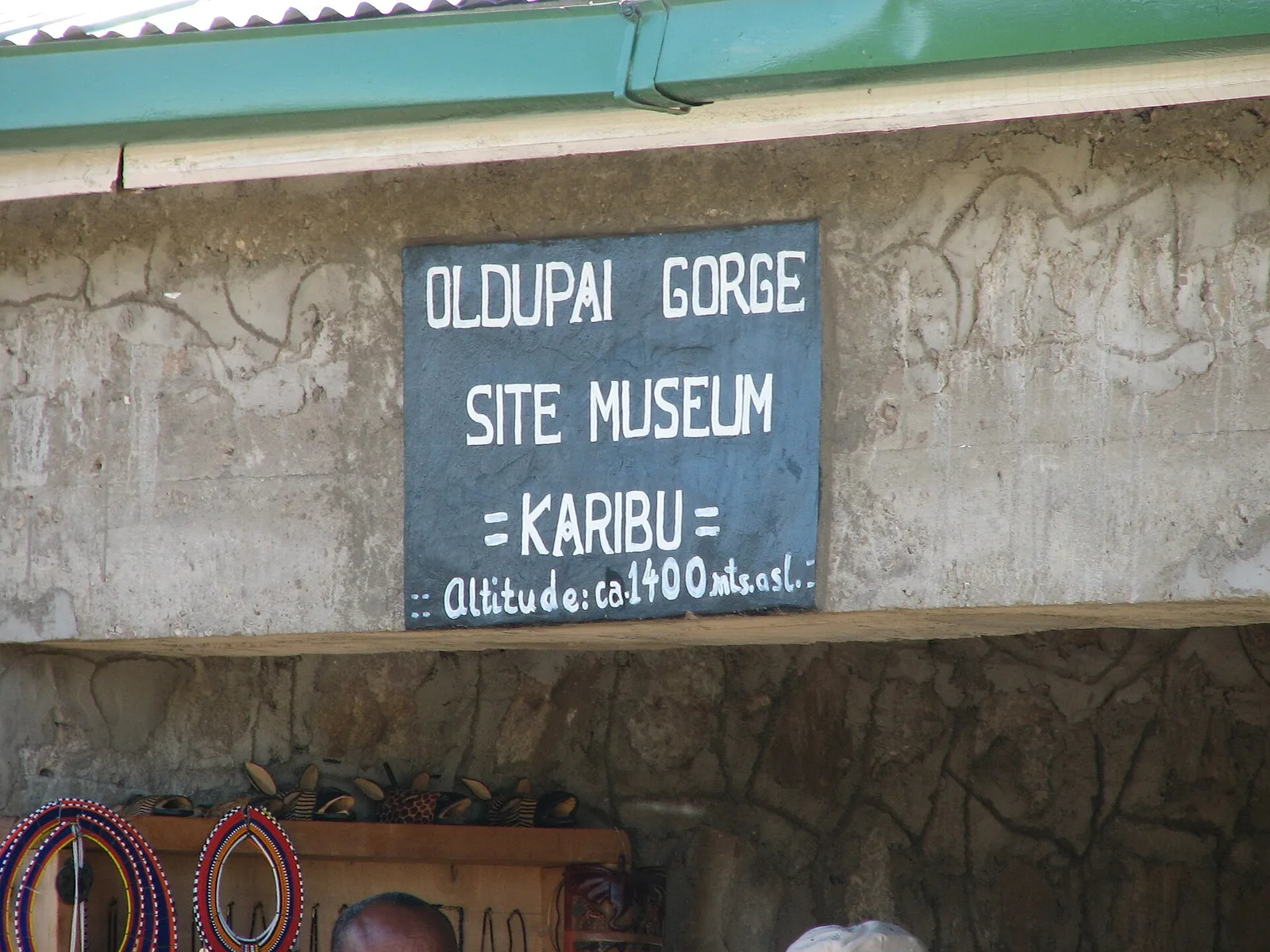
The site museum on the gorge rim is the usual stop on the road between the crater and the Serengeti. Photo: Locutus at English Wikipedia, CC BY 2.5, via Wikimedia Commons
How Big Is Olduvai Gorge?
Olduvai Gorge is roughly 30 miles long and about 300 feet deep in most accounts, though sources give different figures.
Set your expectations before you go. Olduvai is often described as a kind of Grand Canyon, but one visitor account says it is nowhere near as spectacular. Sources measure it differently:
Length and depth by source
The figures depend on where each source starts and stops the ravine:
| Source | Length | Depth |
|---|---|---|
| Wikipedia | about 48 km (30 mi) | up to 90 m (300 ft) of erosion |
| Britannica | approximately 30 miles | 295 feet |
| UNESCO | 14 km long deep ravine | not given |
| Alicia Patterson Foundation | some 25 miles | 350 feet at its deepest |
What that means for the view
The gorge is a long, shallow cut in dry plains, not a dramatic canyon. Plan it as a museum and viewpoint stop, not a scenic highlight. The crater, about 20 kilometres in diameter and 610 metres deep, is the landscape you came for.
Sources: UNESCO World Heritage Centre, Ngorongoro Conservation Area Authority.
What Is Inside the Olduvai Gorge Museum?
The Olduvai Gorge Museum is a small, modern museum and visitors centre with the fossil and tool story of the gorge, plus plaques at the discovery sites.
Mary Leakey founded the museum in 1970. In 2017 the Ngorongoro Conservation Area Authority replaced the original structure with a new museum and visitors centre, which is the building safaris stop at today.
What visitors say
TripAdvisor reviewers describe the museum and grounds as very modern and clean, and the museum as small but with amazing artifacts. A visitor account also notes plaques at the discovery sites.
Seeing the excavations
The gorge may be visited year-round. It is necessary to have an official guide to visit the actual excavations, so a walk down to a dig site is arranged on the spot, not done alone.
How Do You Visit Olduvai Gorge on a Ngorongoro Crater Safari?
Book a route that drives between the crater and the Serengeti, ask the operator to add the Olduvai stop, and check who pays the USD 35.40 Olduvai Gorge fee.
The Olduvai Gorge / Shifting Sand fee is USD 35.40 per non-East African adult and USD 11.80 per child, per the NCAA tariff. It is a separate line from the NCA entry permit of USD 70.80 per adult and the crater service fee of USD 295 per vehicle. No listing on this site names Olduvai in its itinerary, so ask before you book.
Which tours pass the gorge, and what their price covers
The crater fees status below is about the Ngorongoro entry and crater fees on each listing. The Olduvai fee is not named on any of them.
| Tour | Price | Route | Crater fees |
|---|---|---|---|
| 3-Day Serengeti and Ngorongoro Group Camping Safari | $770 per person | Serengeti, then crater rim and floor | Not stated on the listing |
| 3-Day Serengeti and Ngorongoro Big Five Safari | $900 per person | Serengeti, then crater | Included |
| 4-Day Tarangire, Serengeti and Ngorongoro Mid-Range Safari | $1,750 per person | Tarangire, Serengeti, crater | Not stated on the listing |
| 5-Day Serengeti and Ngorongoro Private Safari | $2,845 per person | Karatu, Serengeti, crater | Not stated on the listing |
| Ngorongoro Crater Day Trip from Arusha | $325 per person | Crater only, back to Arusha | Included |
How to ask for the stop
On a group safari, the stop depends on the whole vehicle, so ask the operator when you book. On a private route like the 5-Day Serengeti and Ngorongoro Private Safari, the itinerary is yours, which makes the museum easy to add on the Serengeti transfer day.
Ask two questions in writing: is the Olduvai stop on the plan, and is the Olduvai Gorge fee in the price or paid on the day. The NCAA accepts Visa and Mastercard plus mobile money and bank services, and both Tanzanian shillings and US dollars are accepted, so paying on the day is possible if it is not included.
A budget crater day such as the Budget Ngorongoro Crater Day Trip from Moshi or Arusha at $115 adds $169 per person in cash the day before for the entrance fee, crater service fee and 18% VAT, and it does not go to Olduvai. Compare the routes on the ngorongoro crater tour homepage.
Sources: Ngorongoro Conservation Area Authority, Ngorongoro Conservation Area Authority.
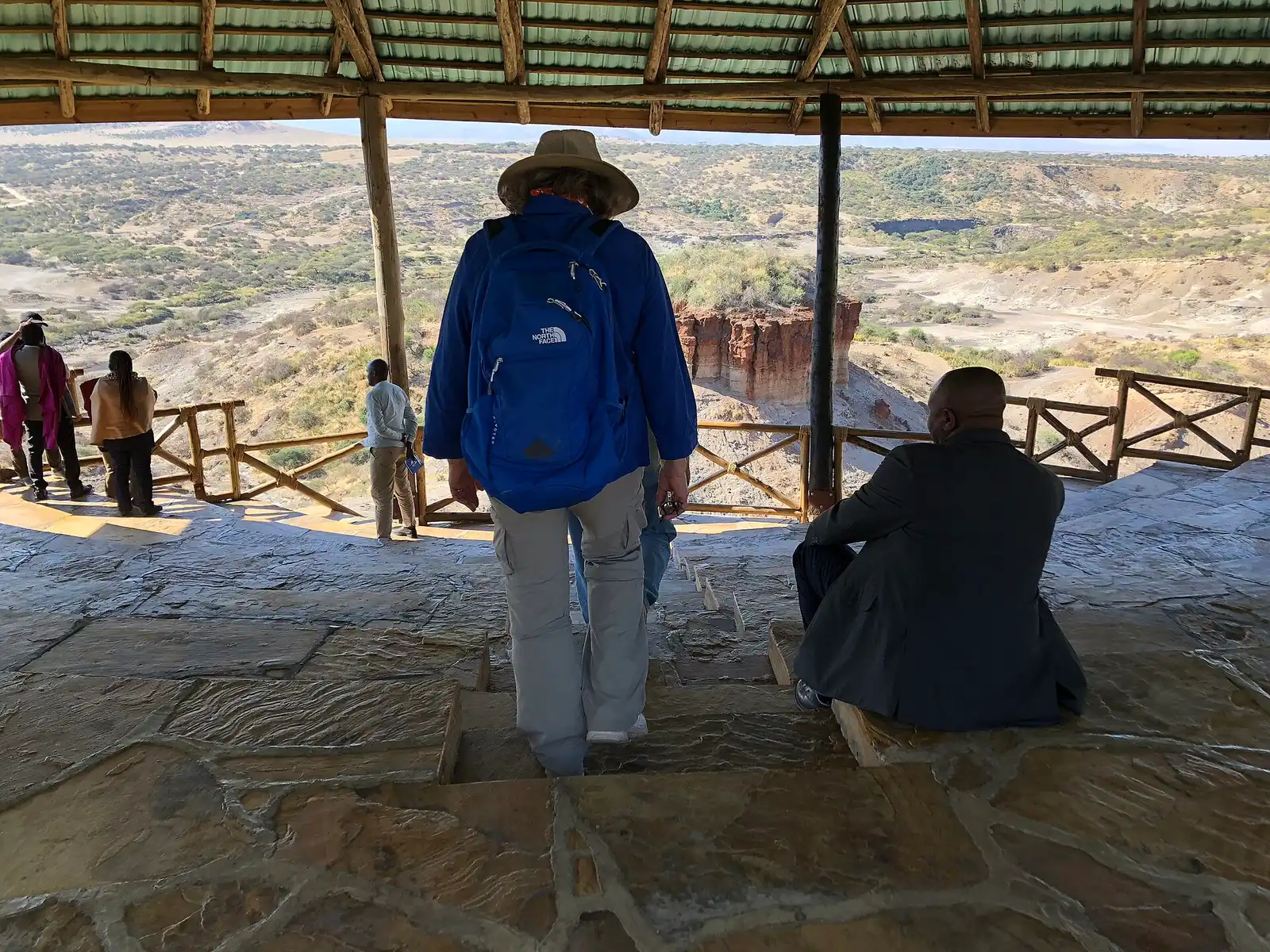
The museum's viewing platform looks over the gorge and is where most visits start. Photo: Kufundisha, CC BY-SA 4.0, via Wikimedia Commons
Is Olduvai Gorge Worth Visiting?
Olduvai Gorge is worth visiting if your safari already drives from the crater to the Serengeti, because the stop is short, the museum is strong and the fee is modest next to the crater fees.
The case for it rests on the museum, not the view. The case against it is a crater-only trip, where the gorge sits off your route.
Go if
Your route already crosses to the Serengeti, you have an interest in early human history, or you want a break from the vehicle on a long transfer day. TripAdvisor reviewers call the museum small but with amazing artifacts.
Skip it if
You are on a single crater day trip from Arusha. The day is built around the crater floor, gates close for descents at 16:00 per the visitor guidelines, and there is no time for a run onto the plains. Keep the gorge for a longer safari instead.
Olduvai Gorge Questions
What does the name Olduvai mean?
The name comes from the Maasai word oldupai, the place of the wild sisal, which is also why some signs and guides say Oldupai. The ngorongoro crater tour homepage lists the routes that pass it.
Do I need a guide at Olduvai Gorge?
Yes for the digs: an official guide is necessary to visit the actual excavations, while the museum is open to safari visitors. Routes like the 3-Day Serengeti and Ngorongoro Group Camping Safari come with a driver-guide.
How much is the Olduvai Gorge fee for children?
The NCAA tariff lists USD 11.80 per child for the Olduvai Gorge / Shifting Sand fee, against USD 35.40 per adult. Ask whether a route like the 4-Day Tarangire, Serengeti and Ngorongoro Mid-Range Safari covers it.
Can you visit Olduvai Gorge in the rainy season?
Yes, the gorge may be visited year-round, and the NCA is open all year including the rainy season. A longer route like the 5-Day Serengeti and Ngorongoro Private Safari leaves room for the stop.
Is Olduvai Gorge a UNESCO site?
Britannica says Olduvai was designated a UNESCO World Heritage site in 1979, the year the Ngorongoro Conservation Area was inscribed. See the routes on the ngorongoro crater tour homepage.
Does a crater day trip stop at Olduvai Gorge?
No listing promises it: the Ngorongoro Crater Day Trip from Arusha runs 10 hours to the crater floor and back, which leaves no time for the plains.
More Guides
- How Big Is the Ngorongoro Crater? Size, Depth and What It Means for Your Safari
Ngorongoro Crater size in 2027: about 20 km across, 610 m deep and a 260 km² floor. See what it means for your safari day.
- Ngorongoro Crater vs Serengeti: Which Safari Should You Choose?
Ngorongoro Crater vs Serengeti in 2027: one day in a 260 km² crater or 3+ days on the plains. Compare both and pick your safari.
- Tanzania Camping Safari: 3 Days in the Serengeti and Ngorongoro Crater
3-day camping safaris with 2 nights at Seronera and the crater rim, compared on fees and group size in 2027. Find yours.