 Ngorongoro Crater Tour
Home › Guides › Is the Ngorongoro Crater Worth Visiting on a Safari?
Is the Ngorongoro Crater Worth Visiting on a Safari?
Is Ngorongoro Crater worth visiting? Yes for most first-time safari travellers: over 25,000 animals, the Big Five among them, live in one caldera you can drive in a single day. This guide weighs what you get against the fees and the crowds, says who should skip it, and shows which tours include the crater fees in the price.
Quick answer The verdict, the cost and who should skip it
Yes, the crater is worth a day for most travellers: the NCAA counts over 25,000 animals on a floor of about 260 km², reachable in one day from Arusha. It is less worth it if crowded sightings spoil a safari for you, since vehicles share one small floor. The real cost depends on whether the crater fees sit inside your tour price.
Key takeaways
- The Ngorongoro Crater Day Trip from Arusha runs 10 hours for $325 per person, with the crater fees included.
- The Budget Ngorongoro Crater Day Trip from Moshi or Arusha lists $115 but adds $169 per person in cash the day before for the entrance fee, crater service fee and 18% VAT.
- Short on days? The 3-Day Serengeti and Ngorongoro Group Camping Safari pairs the crater with the Serengeti for $770 per person.
- Every crater tour is compared with its fee status on the ngorongoro crater tour homepage.
Is it worth going to Ngorongoro Crater?
Yes, for a traveller who wants the most wildlife in the least time, the crater is worth its high fees.
The crater is a 610 m deep caldera, which UNESCO calls the largest unbroken caldera in the world. That bowl shape is the reason it is worth visiting, and also the reason it gets busy.
What you get against what it takes
The table weighs the crater day honestly, with fees from the Ngorongoro Conservation Area Authority (NCAA).
| What you get | What it takes |
|---|---|
| Over 25,000 animals including the Big Five | A USD 70.80 entry permit per adult and a USD 295 crater service fee per vehicle |
| The best chance on the northern circuit of a black rhino | An early start, as gates open at 06:00 |
| Thousands of lesser flamingos on Lake Magadi | Sharing sightings with other vehicles |
| A full safari in one day from Arusha | A day tour of 6-8 hours to 11 hours |
| A caldera about 260 km² across with clean picnic stops | Staying in the vehicle except in designated areas |
Why most travellers say yes
One safari reviewer writes that if you had just one day in your life to experience African wildlife, this would be the place to go. A traveller review on Tripadvisor adds the condition: it is worth it, but the experience changes with the time of entry, the planning and above all the guide.
No tour can promise a sighting, because the animals move freely. What the crater offers is a small area where most species of the conservation area live together, with the giraffe the one exception.
Sources: Ngorongoro Conservation Area Authority, Ngorongoro Conservation Area Authority, Ngorongoro Conservation Area Authority, NCAA tourism activities, UNESCO World Heritage Centre.
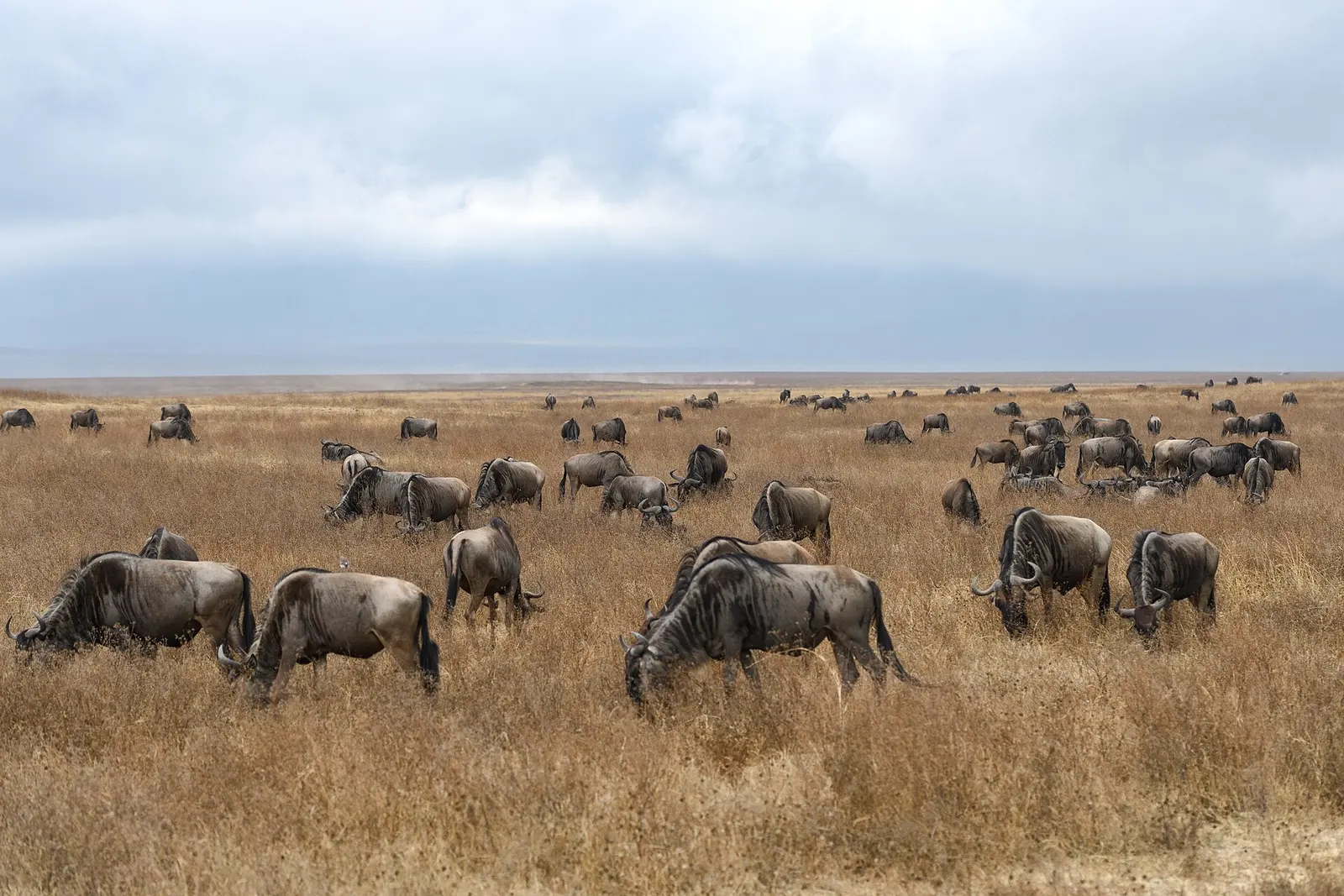
An early game drive on the crater floor, when the light is soft and the herds are active. Photo: Eric Kilby, CC BY-SA 2.0, via Wikimedia Commons
Who will love the Ngorongoro Crater?
First-time safari travellers, short trips and anyone set on seeing a black rhino will get the most from the crater.
The crater rewards travellers who have little time and a long wish list.
Travellers it suits
First safari: one competitor guide says you can tick off the Big Five within an hour of entering, which few parks in Africa offer, though nothing on a game drive is certain.
Rhino seekers: rhino are more difficult to see elsewhere on the northern circuit, so the crater gives the best chance of a black rhino. Dawn is a good time, as rhinos emerge from the forests.
One free day: the Shared Group Ngorongoro Crater Day Trip at $300 or the Ngorongoro Crater Day Trip from Arusha at $325 fit a single day from Arusha, with the fees included.
Photographers who like scenery: the caldera walls rise around a floor where Lake Magadi often holds thousands of lesser flamingos.
Source: NCAA tourism activities.
Who should skip the crater, and what should they do instead?
Skip the crater if other vehicles at a sighting would spoil your day, and spend that budget on quieter parts of the conservation area instead.
The crater floor is about 260 km², and the vehicles crossing it can make it feel cramped.
The crowd problem
One safari specialist notes you may share your wildlife viewing with sometimes 10 other vehicles, and advises anyone likely to be bothered by that to stay clear and not expect a truly wild experience. Another calls the crater overwhelmingly busy at certain times of year and an expensive addition to a safari. NCAA rules cap a sighting at a maximum of 5 vehicles, kept at least 25 metres from the animals, which helps but does not empty the floor.
Quieter options in the same area
The conservation area covers over 8000 km2, and the crater is a small part of it. Olduvai Gorge, a 14 km long ravine, costs USD 35.40 ($35.40) per non-East African adult to visit. The Endoro Nature Trail and Elephant Caves walk costs USD 17.70 ($17.70) per adult.
Walking is not allowed on the crater floor, but short walks of 1 to 4 hours on the rim cost USD 23.60 ($23.60) per adult for the guide fee, with an armed NCAA ranger. In the calving season, Ndutu draws the herds from late December to April.
Sources: Ngorongoro Conservation Area Authority, Ngorongoro Conservation Area Authority, Ngorongoro Conservation Area Authority, UNESCO World Heritage Centre, Ngorongoro Conservation Area Authority.
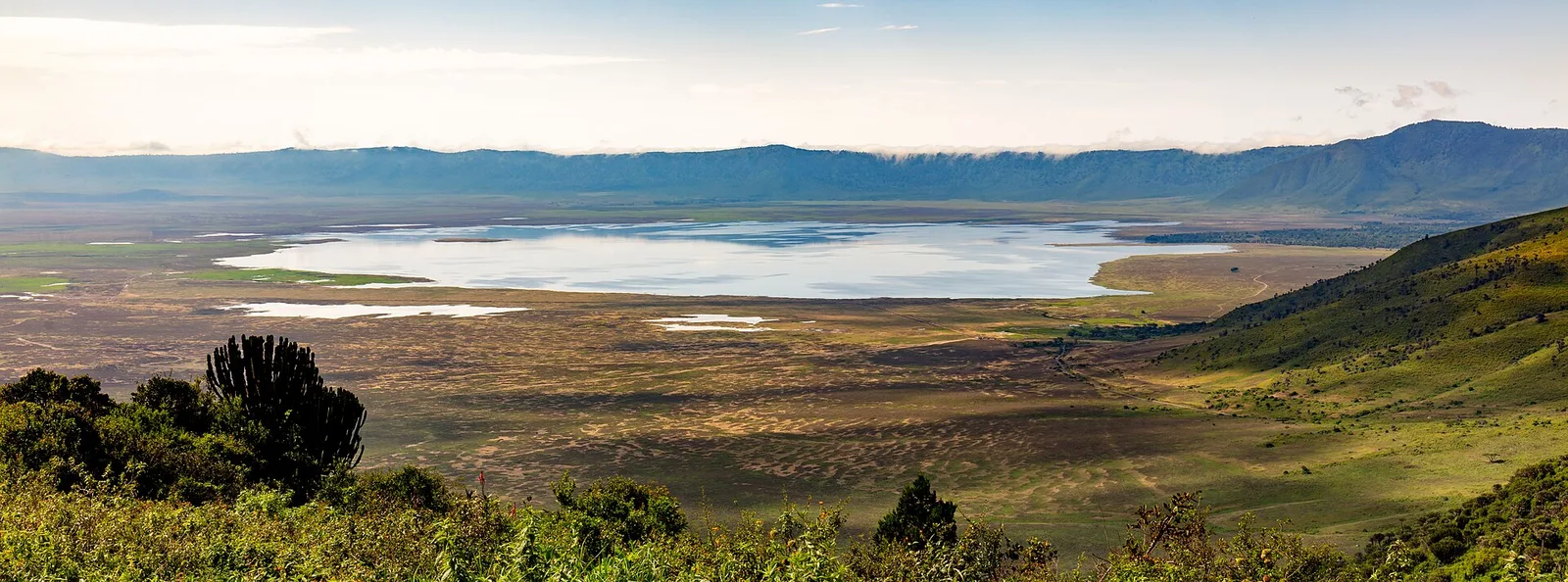
The first look over the rim shows the floor, the lake and the far wall in a single frame. Photo: Diego Delso, CC BY-SA 4.0, via Wikimedia Commons
Tours That Fit
A crater day with the fees included, or the crater inside a longer safari.
 from $325
Most booked day trip
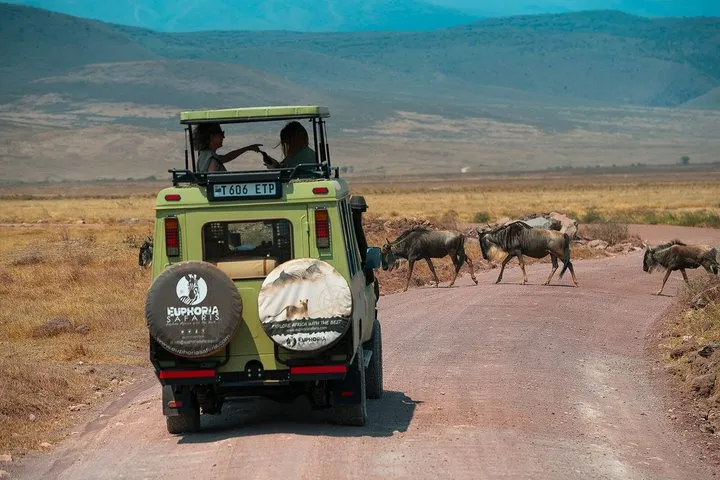
Ngorongoro Crater Day Trip from Arusha
The most-booked crater day trip: a small group of up to 6 from Arusha, with every fee and tax in the price.
Check Availability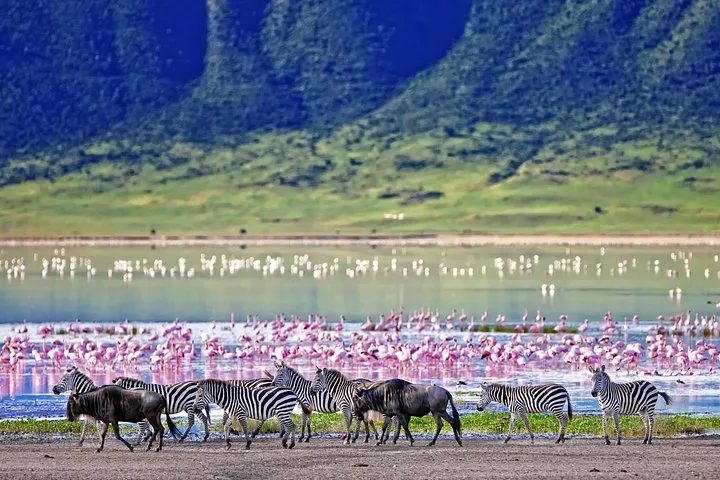 from $300
Shared Group Ngorongoro Crater Day Trip
A shared day trip for up to 7 travellers from Arusha, lunch and all fees included.
Check Availability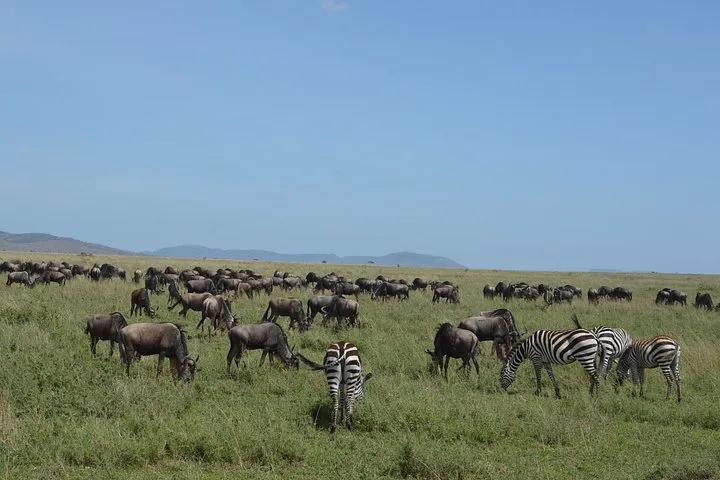 from $770
Most reviewed
3-Day Serengeti and Ngorongoro Group Camping Safari
The most-reviewed safari here: 3 days of group camping in the Serengeti and on the crater rim, up to 7 people.
Check Availability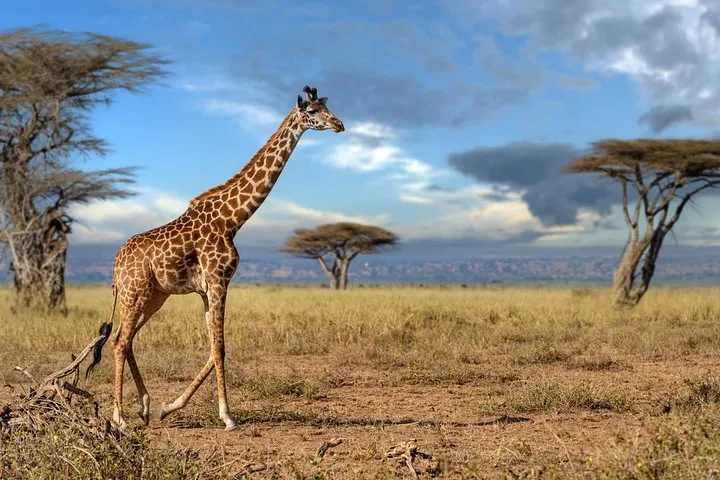 from $1,750
Mid-range lodges
4-Day Tarangire, Serengeti and Ngorongoro Mid-Range Safari
Four days with three nights in mid-range lodges and camps, for a small group of up to 7.
Check AvailabilityWhat does a Ngorongoro Crater safari cost in money and time?
A crater day costs from $115 plus $169 in fees on the cheapest tour, or $300 to $380 with fees included, and it takes one full day.
The NCAA charges non-East African adults aged 16 and over a USD 70.80 ($70.80) entry permit, and every vehicle pays a crater service fee of USD 295 ($295) per trip. Children below 5 enter free. One travel blogger calls the crater the most expensive safari destination in Tanzania, with vehicle costs alone at $295 per day.
Are the fees inside each tour price?
Two tours at a similar price can cost different amounts on the day. Check the fee column first. A listing that does not state its fees may still include them, so confirm with the operator before you pay.
| Tour | Price | Length | Crater fees |
|---|---|---|---|
| Shared Group Ngorongoro Crater Day Trip | $300 | 6-8 hours | Included |
| Ngorongoro Crater Day Trip from Arusha | $325 | 10 hours | Included |
| Private Ngorongoro Crater Day Safari from Arusha | $350 | 11 hours | Included |
| Ngorongoro Crater Joining Group Day Trip | $380 | 9 hours | Included |
| Budget Ngorongoro Crater Day Trip from Moshi or Arusha | $115 | 1 day | Paid on top, $169 in cash |
| 2-Day Tarangire and Ngorongoro Private Camping Safari | $1,350 | 2 days | Not stated on the listing |
| 3-Day Serengeti and Ngorongoro Group Camping Safari | $770 | 3 days | Not stated on the listing |
| 4-Day Tarangire, Serengeti and Ngorongoro Mid-Range Safari | $1,750 | 4 days | Not stated on the listing |
| 5-Day Serengeti and Ngorongoro Private Safari | $2,845 | 5 days | Not stated on the listing |
Extras that can appear on the bill
A hot lunch served in the crater needs a permit of USD 23.60 ($23.60) per vehicle per trip. A night in a lodge or permanent tented camp in the conservation area adds a concession fee of USD 59.00 ($59.00) per adult. A permit is valid for one entry within 24 hours only.
The NCAA states that its tariffs can change without prior notice.
How many days do you need in the Ngorongoro Crater?
One day is enough for the crater itself, and the floor takes only a few hours to explore.
A crater permit covers one entry within 24 hours, and the floor is small enough to drive in a morning.
One day or more
Gates to the crater open from 06:00 to 16:00, so a day trip enters early and climbs out in the afternoon. The Budget Ngorongoro Crater Day Trip from Moshi or Arusha gives about 6 hours in the crater, and the full tours from Arusha run 9 to 11 hours door to door.
Add days only to see more than the crater. The 2-Day Tarangire and Ngorongoro Private Camping Safari adds Tarangire over 2 days, and the 5-Day Serengeti and Ngorongoro Private Safari spends 5 days across the Serengeti and the crater.
Sources: Ngorongoro Conservation Area Authority, Ngorongoro Conservation Area Authority.
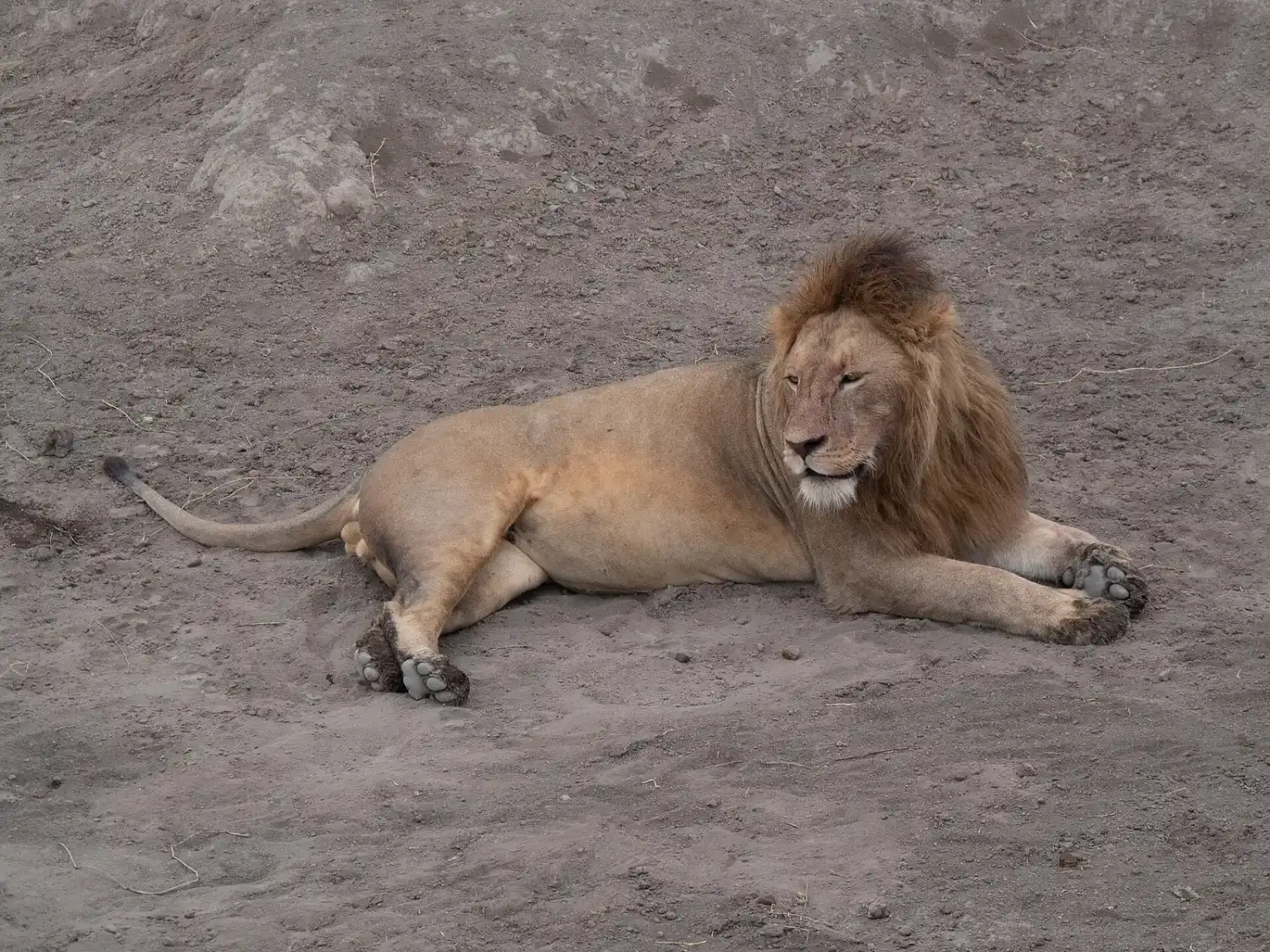
A male lion at rest on the crater floor, the kind of close sighting the crater is known for. Photo: Jay Galvin, CC BY 2.0, via Wikimedia Commons
When is the crater most worth visiting?
The dry season from June to October is the easiest time, while the wet months from November to May trade crowds for green scenery.
The NCAA says the conservation area is open all year, including the rainy season, and advises a 4x4 in muddy periods.
Crowds against scenery
The dry season runs from June to October, and the coldest months are June to August, when the rim gets cold at night. The wet season runs from November to May. One specialist advises travelling closer to the rains if you value scenery and solitude, and accepting crowds for peak-season wildlife.
The calving season at Ndutu, from late December to April, makes the wet months a strong time to pair the crater with the herds.
Sources: Ngorongoro Conservation Area Authority, Ngorongoro Conservation Area Authority, Ngorongoro Conservation Area Authority.
Where do you stay for a Ngorongoro Crater safari?
You stay on the rim or in the Ngorongoro Highlands, because nobody sleeps on the crater floor.
Day trips start in Arusha or Moshi, but a multi-day safari sleeps near the gate.
Rim, highlands or Karatu
The conservation area has 11 lodges, 49 special campsites and 1 public campsite, Simba A, which is at least 19 km from Loduare Gate and needs no booking. Loduare, the main gate, is 14 km from Karatu town. A public campsite costs USD 35.40 ($35.40) per adult per night, and lodges add the USD 59.00 ($59.00) concession fee.
Temperatures on the rim are always lower than on the floor, so pack warm layers for the night.
Sources: Ngorongoro Conservation Area Authority, Ngorongoro Conservation Area Authority, Ngorongoro Conservation Area Authority.
Which is better, Serengeti or Ngorongoro?
The crater is better for one day and for rhino, the Serengeti for space and the migration herds, and most safaris combine both.
They answer different trips, so the choice comes down to the days you have.
Pick by trip length
With one day, the crater wins, since a day tour from Arusha covers it. With three days or more, add the Serengeti, where the herds of the migration roam. The 3-Day Serengeti and Ngorongoro Group Camping Safari at $770 is rated 5 from 796 reviews, and the 4-Day Tarangire, Serengeti and Ngorongoro Mid-Range Safari at $1,750 adds Tarangire.
Neither listing states whether the crater fees are included, so ask before booking.
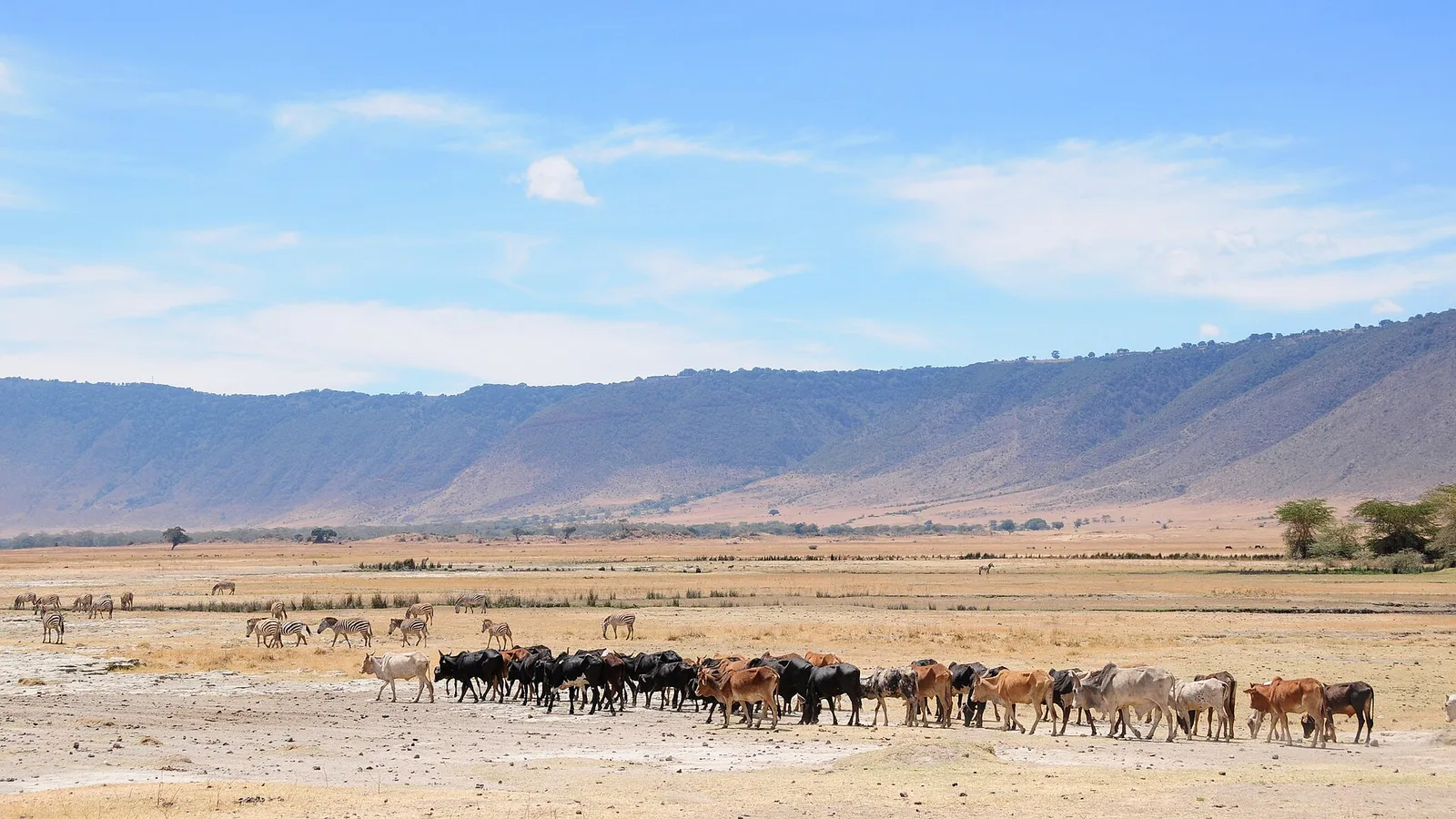
Maasai herders still graze cattle in the conservation area, which is part of what sets it apart from a national park. Photo: Vince Smith, CC BY-SA 2.0, via Wikimedia Commons
How do you get the most from a crater day?
Enter at the 06:00 opening, pick your guide with care and pack lunch and warm clothes.
A few choices decide whether the crater day feels crowded or special.
Practical steps
Book a tour that reaches the gate for the 06:00 opening, as dawn is the best time for rhinos. A licensed guide or an official NCAA guide must accompany every crater visitor, and the guide decides much of the day, so read the reviews. There is no restaurant on the floor, only lunch boxes and booked hot-lunch picnic spaces.
Bring a warm layer for the rim and leave plastic bags at home, as they are not allowed in the area. Speed is limited to 25 km/h in the crater, so plan on slow driving.
Sources: Ngorongoro Conservation Area Authority, Ngorongoro Conservation Area Authority.
Is Ngorongoro Crater Worth Visiting? FAQ
Is the Ngorongoro Crater worth visiting?
Yes for most first safaris, as one day reaches over 25,000 animals, and a ngorongoro crater tour from Arusha fits that day.
Is the budget crater tour worth it?
It is the cheapest entry at $115, but the Budget Ngorongoro Crater Day Trip from Moshi or Arusha adds $169 per person in cash for the fees, so compare it with tours that include them.
Can you stay inside the Ngorongoro Crater?
No, visitors sleep on the rim or in the highlands, and a ngorongoro crater tour returns you to Arusha the same day.
Can you walk in the Ngorongoro Crater?
No, walking safaris are not allowed on the floor, though the rim allows walks with an armed ranger, and the Ngorongoro Crater Day Trip from Arusha is a game drive.
Is the crater worth visiting in the rainy season?
Yes, the area is open all year and the green season is quieter, which the Shared Group Ngorongoro Crater Day Trip covers on a single day.
More Guides
- 2-Day Tanzania Safari to Tarangire and the Ngorongoro Crater
2-day safaris from Arusha with 1 night out, compared on crater fees and where you sleep in 2027. Pick the one that fits.
- 3-Day Tanzania Safari With the Ngorongoro Crater
3-day Tanzania safari routes for 2027: 2 nights, the crater plus Serengeti or Tarangire and Manyara. Compare what each trip covers.
- 5-Day Tanzania Safari: Tarangire, Serengeti and the Ngorongoro Crater
5-day Tanzania safari routes for 2027: 4 nights, Tarangire, Serengeti and the crater. See what each trip includes and pick yours.